Nicotine & Vaping Awareness
Make A Difference, Choose Prevention
The Danger of Nicotine Pouches
Key Facts About Nicotine Pouches and Youth Risk
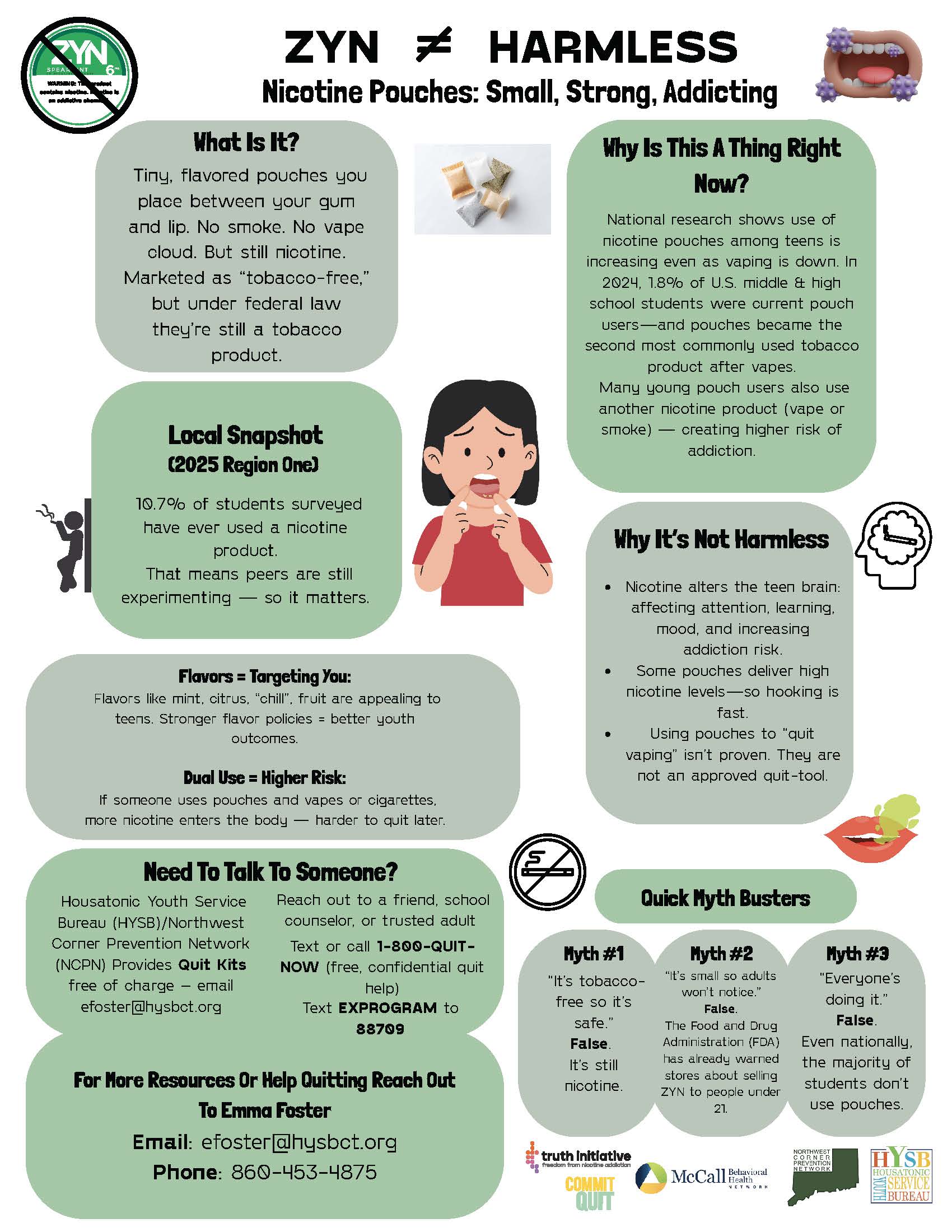
- Nicotine pouches are small oral pouches that contain nicotine powder and flavorings, not tobacco leaf.
- They are marketed as smoke free, spit free, odor free and vape free, which leads many kids to believe they are harmless.
- These products come in sweet flavors and multiple nicotine strengths, making them appealing to middle and high school students.
- Because they create no smoke or vapor, they are easy to hide and can be used discreetly in classrooms, bathrooms and at school events.
- Many nicotine pouches contain high levels of nicotine and may include other harmful chemicals.
- Nicotine is highly addictive and can interfere with brain development, memory and attention in adolescents.
- Youth use of nicotine pouches is rising quickly, increasing the risk of long term nicotine addiction.
- These products are not approved by the FDA as a method to quit smoking.
What are E-cigarettes?
- E-cigarettes are electronic devices that heat a liquid and produce an aerosol, or mix of small particles in the air.
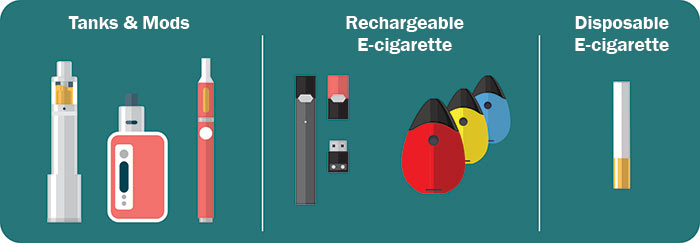
- E-cigarettes come in many shapes and sizes. Most have a battery, a heating element, and a place to hold a liquid.
- Some e-cigarettes look like regular cigarettes, cigars, or pipes. Some look like USB flash drives, pens, and other everyday items. Larger devices such as tank systems, or “mods,” do not look like other tobacco products.
- E-cigarettes are known by many different names. They are sometimes called “e-cigs,” “e-hookahs,” “mods,” “vape pens,” “vapes,” “tank systems,” and “electronic nicotine delivery systems (ENDS).”
- Using an e-cigarette is sometimes called “vaping.”
How E-cigarretes/Vaping Are Used
How harmful is vaping to youth?
Doctors and Scientists are still researching the long-term health effects of vaping, here is what we do know:
- Some of the ingredients in e-cigarette aerosol could also be harmful to the lungs in the long-term. For example, some e-cigarette flavorings may be safe to eat but not to inhale because the gut can process more substances than the lungs.
- Defective e-cigarette batteries have caused some fires and explosions, a few of which have resulted in serious injuries.
- Children and adults have been poisoned by swallowing, breathing, or absorbing e-cigarette liquid through their skin or eyes. Nationally, approximately 50% of calls to poison control centers for e-cigarettes are for kids 5 years of age or younger.
Nicotine - is unsafe & addictive
- Most e-cigarettes (vapes) contain nicotine—the addictive drug in regular cigarettes, cigars, and other tobacco products.
- A CDC study found that 99% of the e-cigarettes sold in assessed venues in the United States contained nicotine.
- Some vape product labels do not disclose that they contain nicotine, and some vape liquids marketed as containing 0% nicotine have been found to contain nicotine.
- Nicotine can harm the developing adolescent brain.2 The brain keeps developing until about age 25.
- Using nicotine in adolescence can harm the parts of the brain that control attention, learning, mood, and impulse control.
- Each time a new memory is created or a new skill is learned, stronger connections – or synapses – are built between brain cells. Young people’s brains build synapses faster than adult brains. Nicotine changes the way these synapses are formed.
- Using nicotine in adolescence may also increase risk for future addiction to other drugs.
The Strategic Prevention Framework
The Strategic Prevention Framework (SPF)
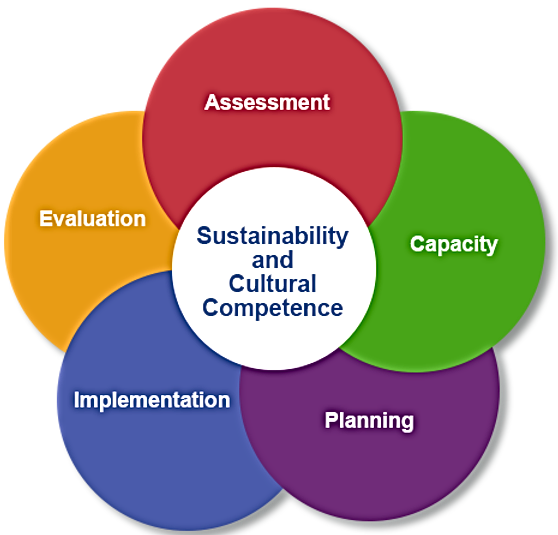
Prevention professionals use SAMHSA’s Strategic Prevention Framework (SPF) as a comprehensive guide to plan, implement, and evaluate prevention practices and programs
About The SPF
SAMHSA’s Strategic Prevention Framework (SPF) is a planning process for preventing substance use and misuse. The five steps and two guiding principles of the SPF offer prevention professionals a comprehensive process for addressing the substance misuse and related behavioral health problems facing their communities. The effectiveness of the SPF begins with a clear understanding of community needs and involves community members in all stages of the planning process.