Cannabis Awareness
Together, we can prevent drug use
What is Cannabis - Marijuana?
Under the Controlled Substances Act (CSA), cannabis (family Cannabaceae) falls into two categories— marijuana and hemp—but, in fact, both come from the same group of plants. Marijuana refers to the cannabis plant, or derivative products that contain more than 0.3 percent of the chemical compound delta-9- tetrahydrocannabinol (THC), the main psychoactive component responsible for the plant’s intoxicating effects.
The term “hemp” denotes a cannabis plant with no more than 0.3 percent or less THC levels.
- Plant form or “flower”: The most known form of marijuana; the dried flowers of the cannabis plant.
- Sinsemilla: Seedless flowers from unfertilized female plants; contain more THC than other marijuana plant parts or fertilized flowers.
- Hashish: Historically produced by a manual process of compressing dried cannabis flowers through screens to amass trichomes—the part with the most THC—resulting in a dried resin-type substance more potent than dried flowers.
- Concentrates/Extracts: The modern process of extracting cannabinoids, especially THC, from the entire marijuana/cannabis plant with solvents or carbon dioxide extraction processes. The plant body is mainly discarded, leaving a more potent product (akin to grain alcohol). Concentrates may not smell like marijuana, depending on how refined the extraction is. Commonly used terms for concentrates include dabs, budder/badder, wax, shatter, crystalline, distillate, crumble, and sift.
How Marijuana Is Used
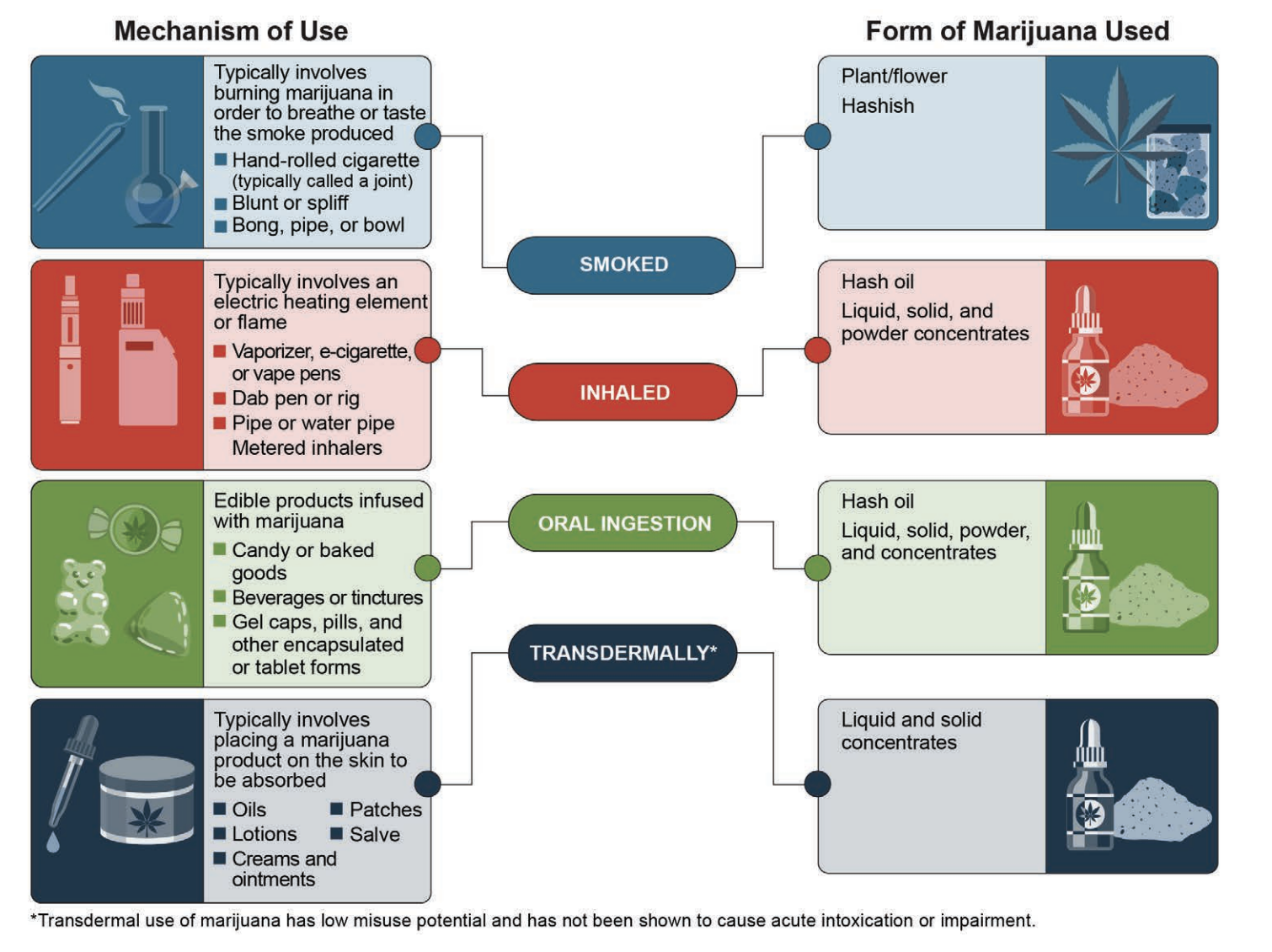
It can be...
Youth may experience substantial harm from marijuana use, especially heavy and chronic use. Frequent or intensive (e.g., daily or near-daily) marijuana use is strongly associated with higher risks of experiencing many adverse health and social outcomes.
In addition to intoxication, flooding the brain with large amounts of THC may impact normal functions for short or long periods, including:
- Learning, memory, and other cognitive processes critical to learning
- Appetite
- Motion/motor control
- Sleep
- Reproduction/Fertility
- Other possible effects can include altered senses, changes in mood, and hallucinations.
- THC can also result in disruption of cognitive processes that are important for academic performance and activities like driving and sports.

The Strategic Prevention Framework
The Strategic Prevention Framework (SPF)
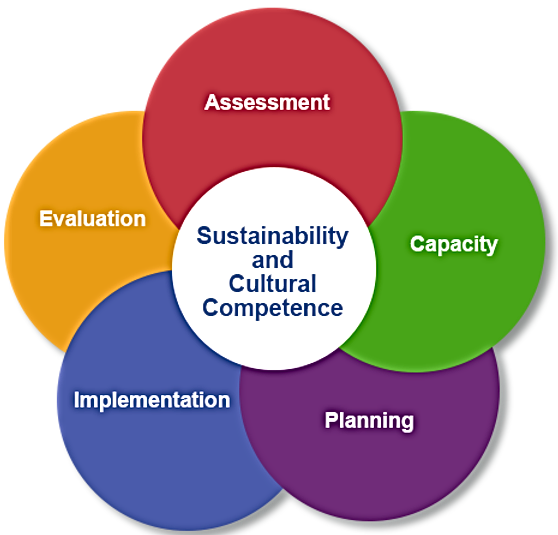
Prevention professionals use SAMHSA’s Strategic Prevention Framework (SPF) as a comprehensive guide to plan, implement, and evaluate prevention practices and programs
About The SPF
SAMHSA’s Strategic Prevention Framework (SPF) is a planning process for preventing substance use and misuse. The five steps and two guiding principles of the SPF offer prevention professionals a comprehensive process for addressing the substance misuse and related behavioral health problems facing their communities. The effectiveness of the SPF begins with a clear understanding of community needs and involves community members in all stages of the planning process.